
The Engineers Knew
18 Aug 2026Scissors
Corporations make lots of money when they deliver poor quality goods and services, and they make even more money if they initially offer a decent product, and slowly ruin it over time. Cory Doctorow calls it "enshittification" and it isn't new, it's been going on for a long time, and it's here to stay because it makes those companies pots of money.Take this pair of scissors I bought recently. They looked like a perfectly cromulent pair of scissors, but when I went to use them, they immediately fell to pieces.
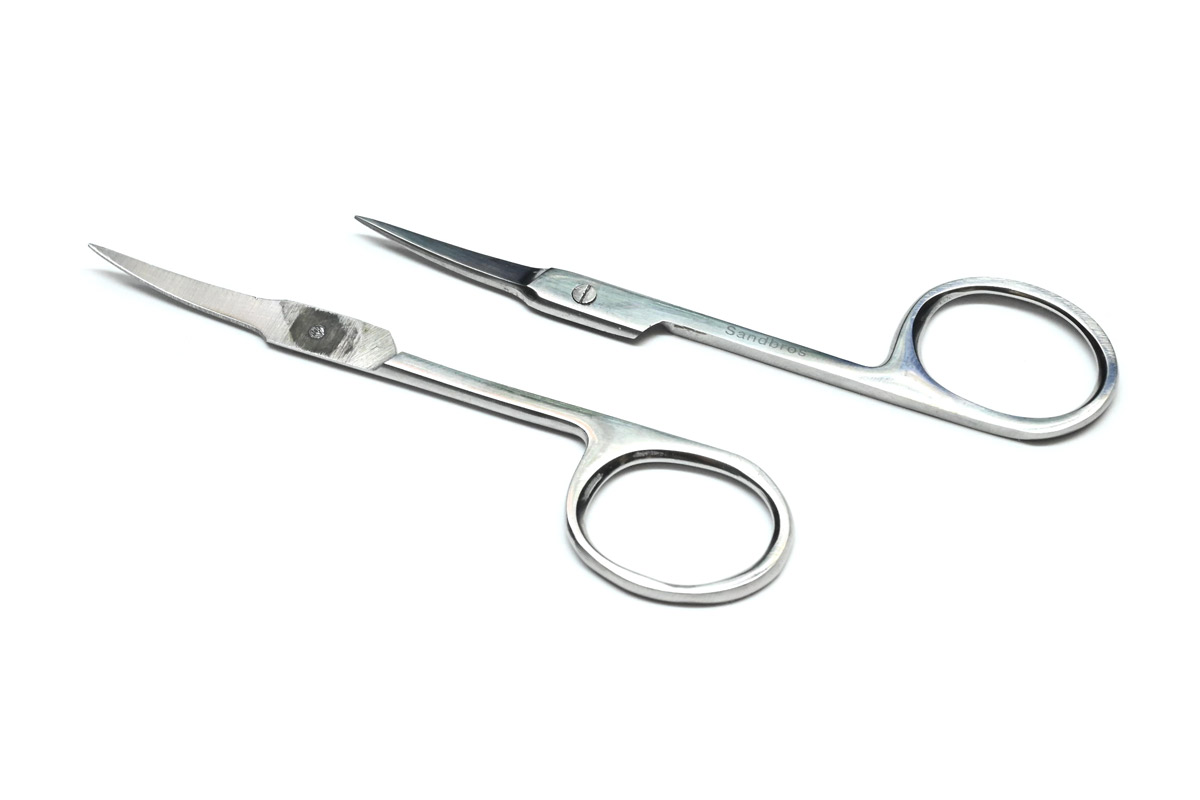
I hadn't paid much for them, I think about £4, which makes it hardly worth my time to demand a refund except on principle. Perhaps that is the secret to their success. Most people can't be bothered to complain, so if you make your scissors from the crumbliest metal possible you'll make a mint.
If I had wanted a pair of scissors that worked, maybe I should have gone for a known brand name – is there a reputable company that makes high quality scissors? A company with accumulated good will that it doesn't want to entirely squander? I don't know, but let me tell you a funny story about a brand name.
Knives
Perhaps the only tool more fundamental than scissors is the knife. To avoid the hassle of sharpening, I'm a big fan of these folding "box cutter" or "utility" knives that take a disposable blade.
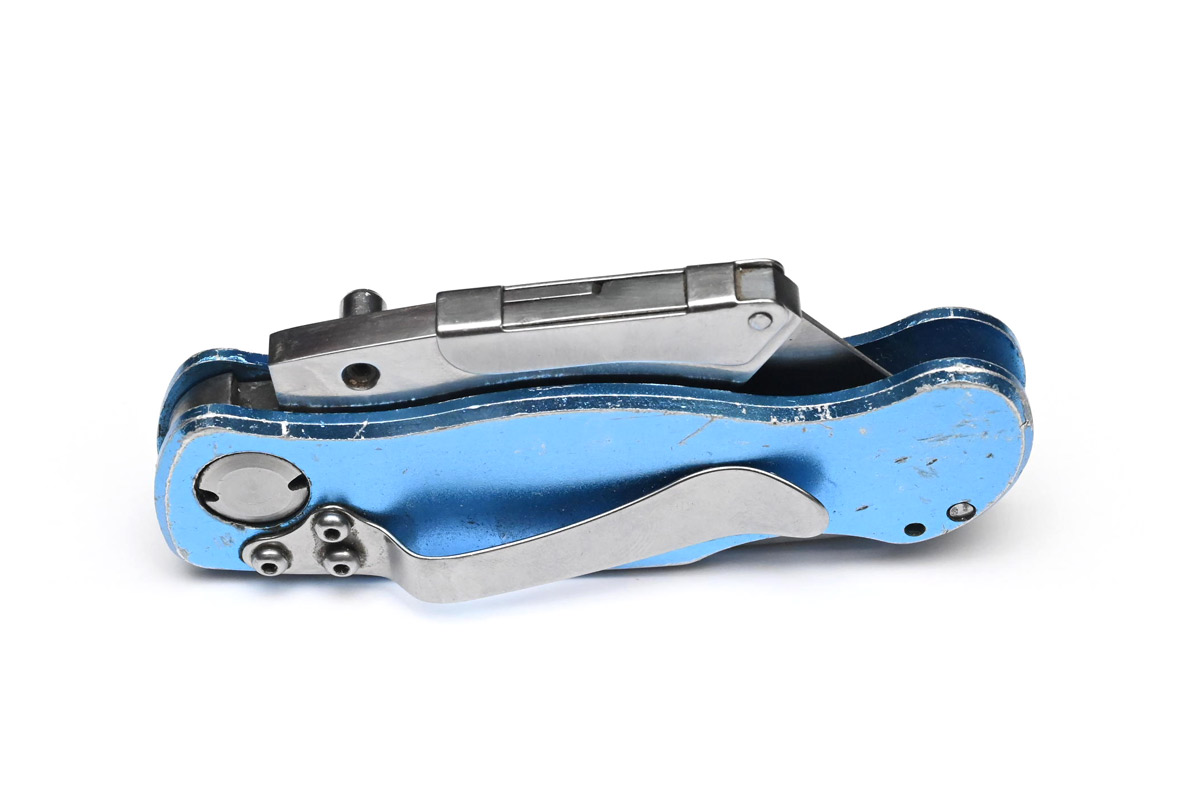
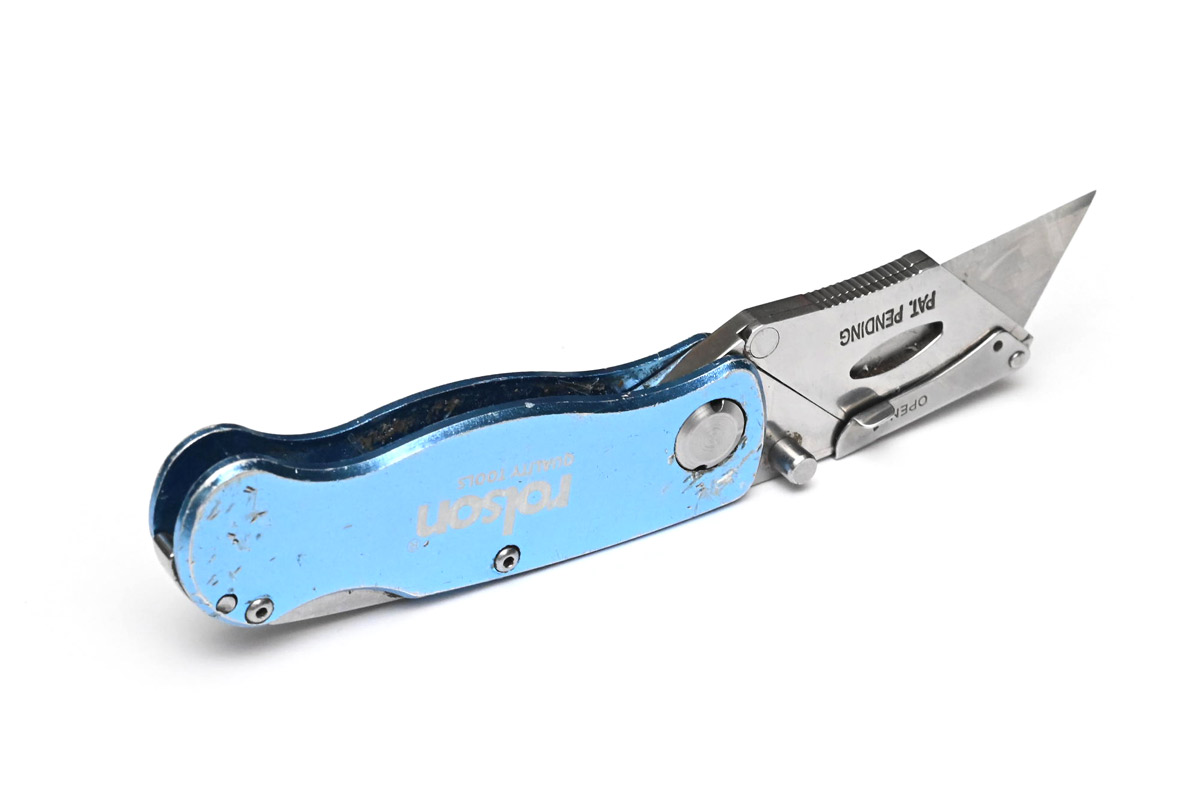
I've always referred to them as a Stanley blade, but the quick release mechanism here means you can swap blades much faster than a traditional Stanley knife. A 100-pack of blades lasts forever, and so we always have a sharp, sturdy knife when we need one.
I would describe these tools as "solved". They do not need improvement or refinement. They do one job and they do it really well. Rolson isn't a particularly famous brand, but their simple products have lived on the shelves of tool shops for ages. I bought that blue knife maybe twenty years ago and it's still performing perfectly.
For such an important tool, I like redundancy. I like having spares, or better yet, a dedicated knife at every workbench in the lab, so we don't have to go on fetch quests mid project. Unique to knives, "age verification" makes it slightly more of a pain to buy more of them online, compared to most tools.
Rarely do I enter a brick-and-mortar hardware shop these days, but when I recently did, vaguely aware that I own one fewer folding knife that I do workbenches, I spotted another of the Rolson branded knives, and picked it up without thinking.
That is how they got me.
A Grim Comparison
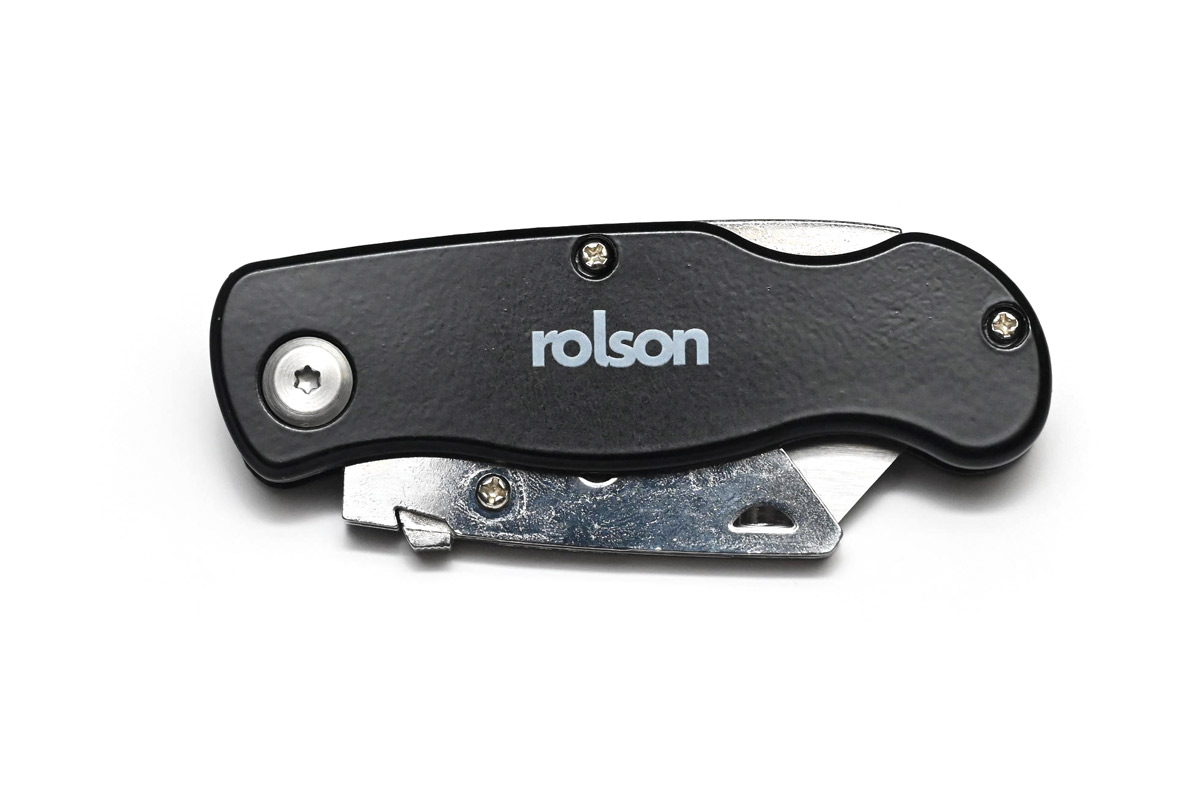
I first felt that something was afoot when I went to open the new knife. The stud that lets you open it one handed was gone. The only way to open this knife is to use two hands, grabbing it by the blade holder.That's where our problems begin. The blade holder has a different design, and the blade is loose. It rattles around, wobbly as can be, making the entire knife utterly useless for anything but the crudest tasks.
The knife has been redesigned to be worse, and now the only suitable place for it is the bin. And that's where it would have ended up, if morbid curiosity hadn't led me to look a little closer.
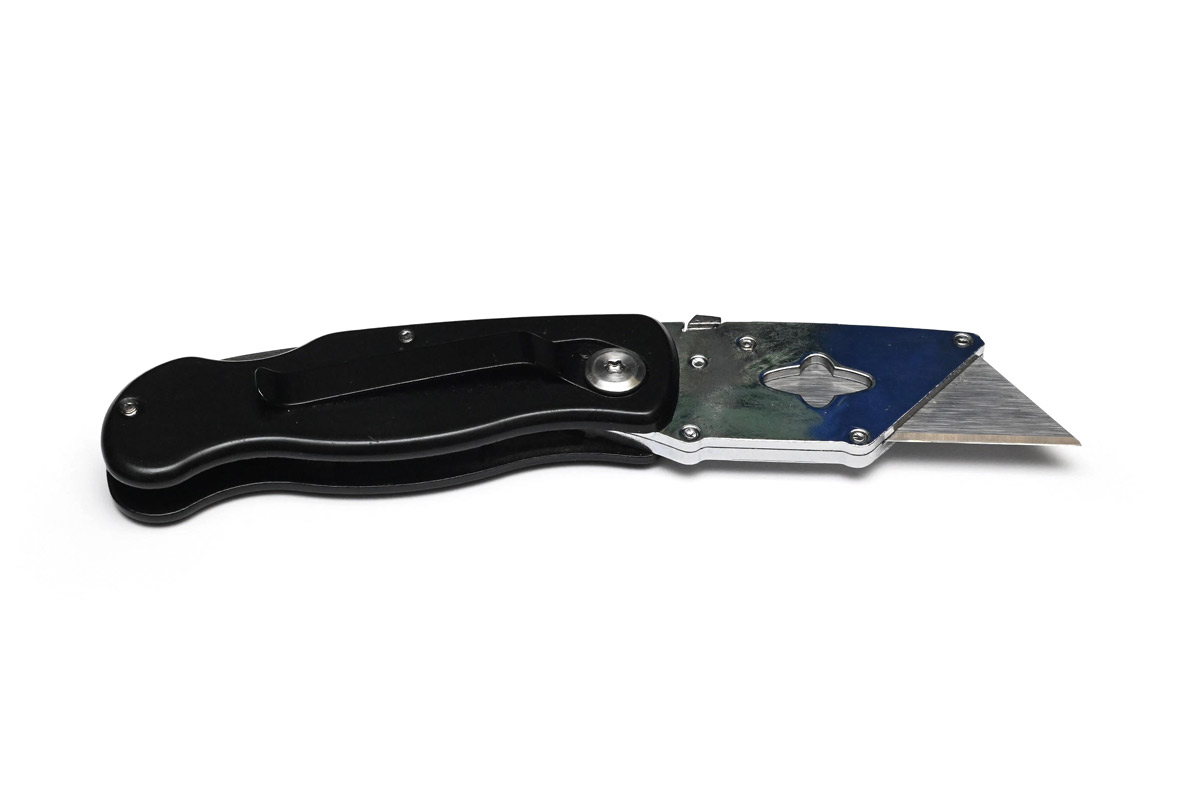
The patented quick-release blade holder is gone, replaced with something that doesn't even work.
The handle, formerly aluminium, is now a cheaper substitute (forgivable I suppose) but astonishingly even the steel parts have been replaced. The new pieces are chrome plated to hide the sin, but looking carefully you can see that the core of the knife is die-cast and hollow.
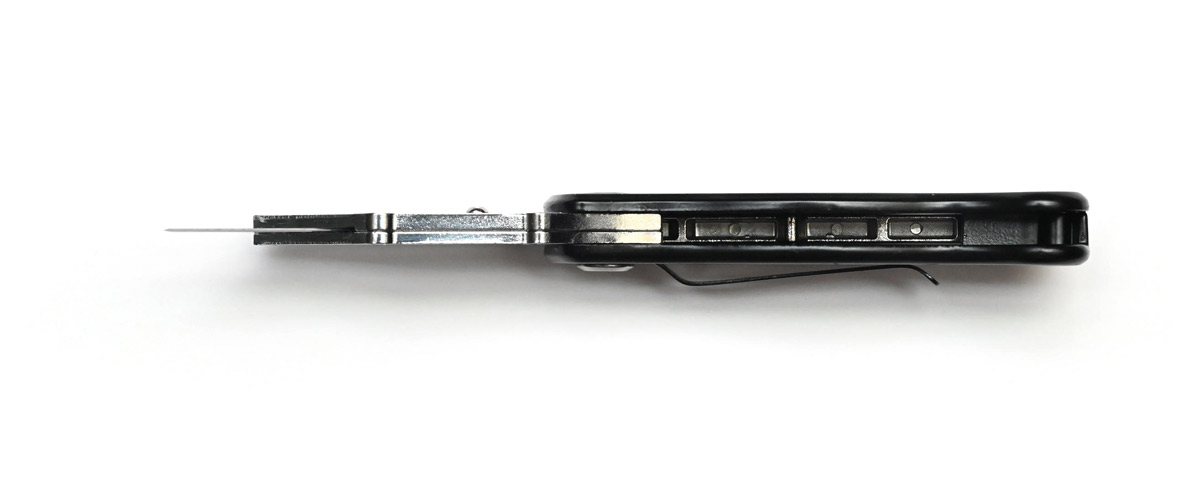
Truly a masterclass in enshittification. But there's something else that caught my eye...
They Knew
Like I said, a story about a product being made worse isn't news.I can imagine the board meeting, where the executives got together and said, "We need to make this product worse. We need it to be as cheap to make as possible, even at the expense of it being a functional product. Make it from paper mâché for all we care, but make it cheap!"
The designers, and mechanical engineers, grimly turned to their duty, but as a kind of silent protest, a feeble acknowledgement of what they were doing, almost an apology, they made one other change to clear their conscience.
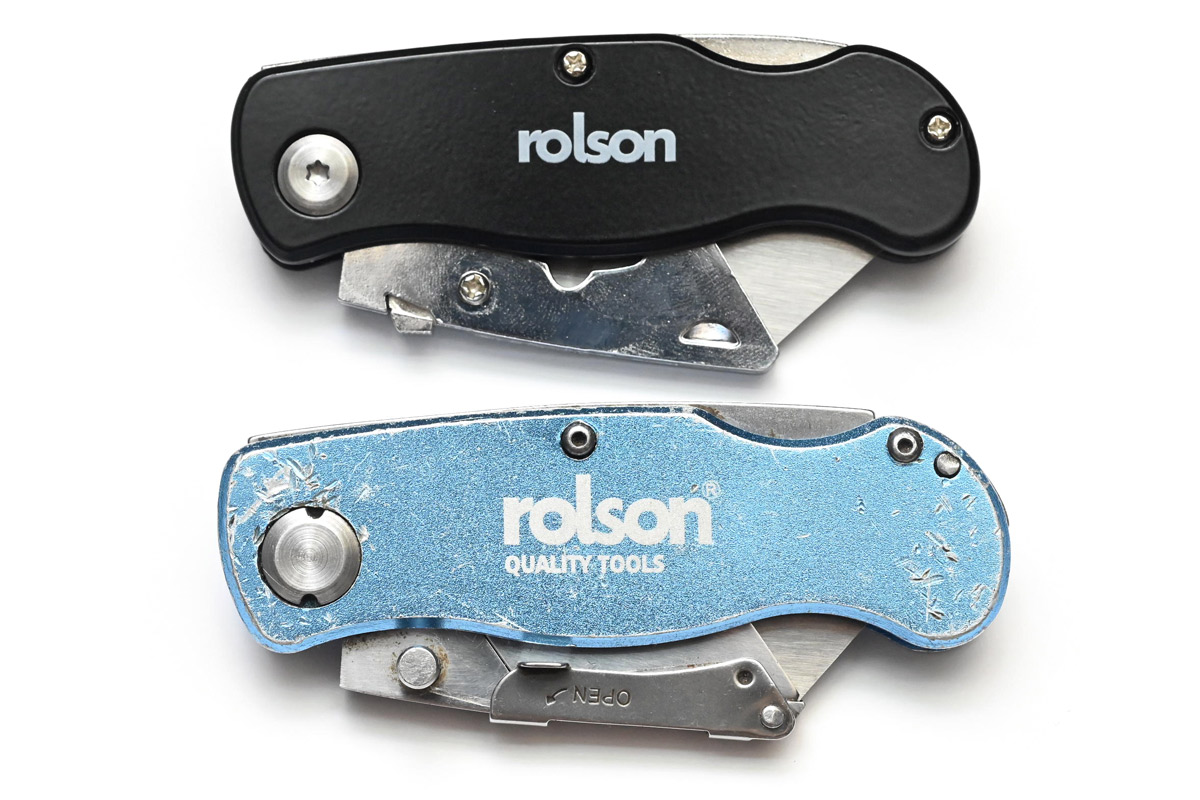
Where formerly it said "Rolson / Quality Tools", it now just says "Rolson".
The omission speaks volumes, a bit like Google quietly dropping "don't be evil" from their manifesto.
Well in the end, Rolson got my money, and it isn't worth my time to get a refund, except maybe on principle. I'm now going to put this new knife in the bin.